Burbank Termite Case Study — At a Glance
Location: Burbank, Brisbane QLD
Property: Semi-rural home bordering bushland
Termite: Coptotermes
First sign: Live termites discovered in kitchen window frame
Extent found: Subfloor, floorboards, kitchen window and roof void
Inspection: Full termite inspection including Termatrac T3i
Initial treatment: Termidor Foam and targeted termite dusting
Long-term recommendation: Termidor HE termite management system
What we discovered during the termite inspection at this Burbank property
We identified Coptotermes termites in several parts of this home. Usually, termite damage isn’t this severe because owners catch early signs of termites – like bubbled paintwork or mud tubes.
Unfortunately, the home bordered extensive bushland and did not have a current chemical termite management system in place, leaving the structure without that additional layer of protection against subterranean termite entry.
Read about the four areas where we found termites in this house.
Termite workings discovered in the Subfloor
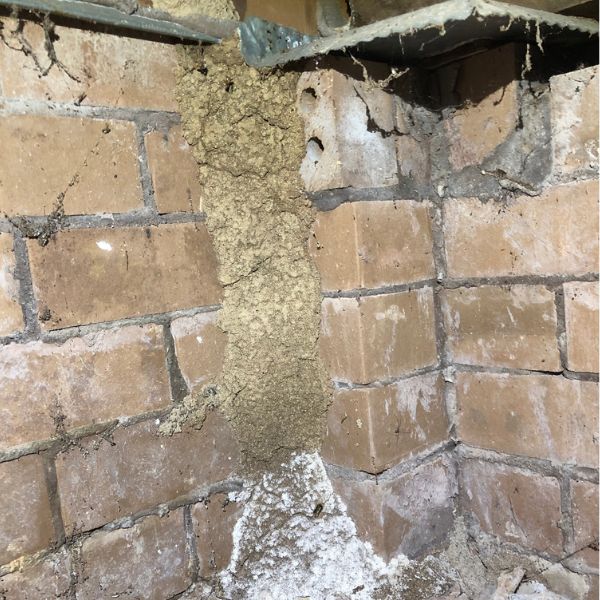
Termites easily construct mud leads up brick footings in subfloors to reach timber framing above. Because subfloors are dark, damp, and rarely inspected, activity often goes completely unnoticed.
That’s precisely what occurred at this Burbank property. The substantial termite lead showed that the termites had established a well-protected concealed entry route from the soil into the structure. Although the size of a termite lead cannot tell us exactly how long an infestation has been present, it was an important indication of established activity.
Notice how the termites easily built their lead over the ant capping!
Termites discovered in the window frame
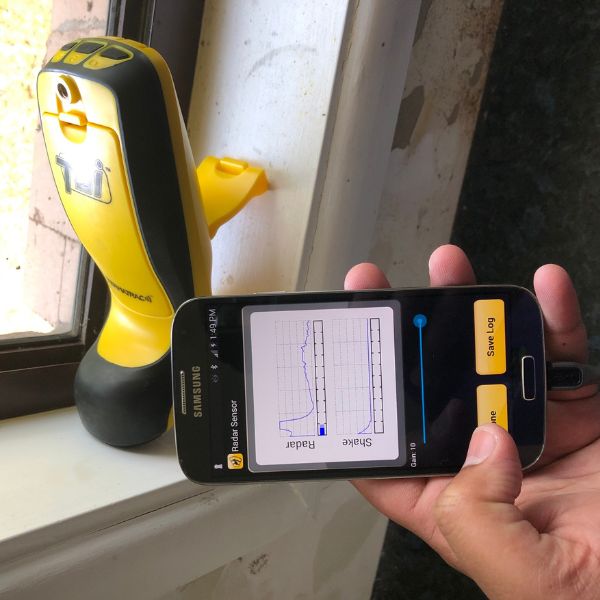
The kitchen window frame was the first place the homeowner spotted signs of activity. Naturally, we needed to verify whether live termites were still present inside the timber without disturbing them.
To do this, we deployed the Termatrac T3i. This specialised motion-detection radar device confirms live termite movement behind walls and timber frames without needing to drill or damage the structure.
Signs of termites in the roof void
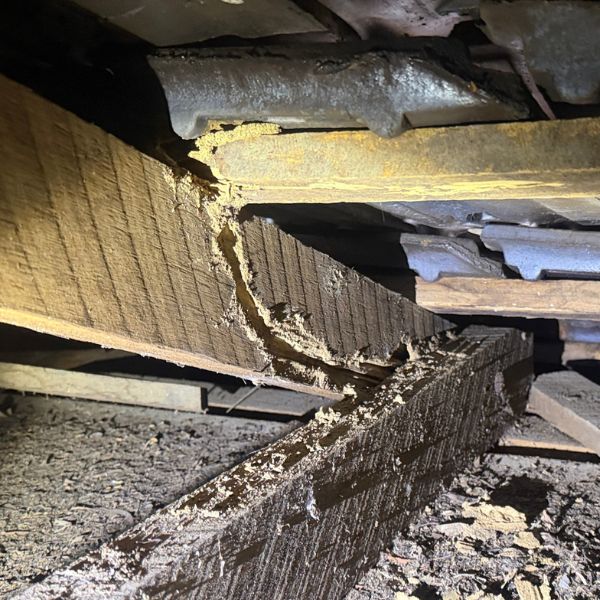
A comprehensive termite inspection always includes getting inside the roof space to look for activity. Given the extent of the infestation elsewhere in this home, checking the roof void was a top priority – and the findings were significant.
Termites will frequently travel straight to the highest points of a structure to target prime structural timber. To a termite colony, your house isn’t a man-made building; it’s simply a massive, unusually convenient tree waiting to be consumed.
Termites in the floorboards
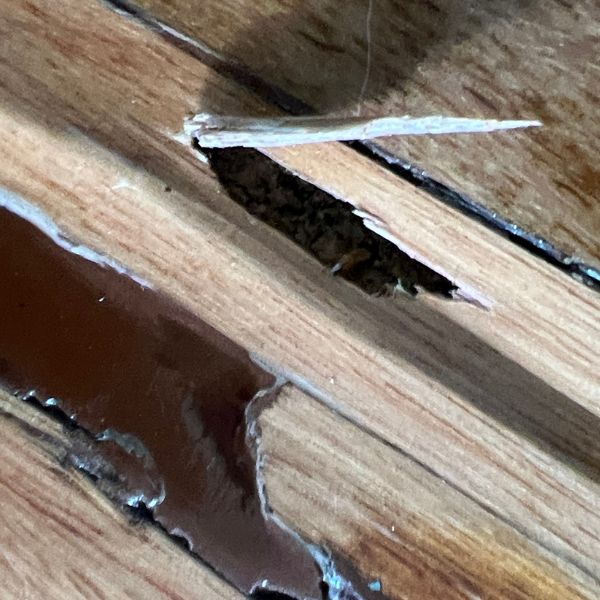
Homes with suspended flooring, such as this Burbank property, are typically constructed using timber frameworks. When termites build mud bridges up from the soil into the subfloor, these floorboards present as the first structural timber they encounter and attack.
To make matters worse, these particular floorboards were constructed from eucalyptus – a natural favourite and prime food source for native Australian termites.
How did we apply the initial treatments?
There’s no single “one-size-fits-all” fix. Before picking a treatment method, we always have to evaluate a few crucial factors:
-
Termite Species: What type of termite are we dealing with?
-
Infestation Scale: How far have they spread into the structure?
-
Pest Volume: Are there enough active termites present for a targeted transfer method?
-
Safety & Environment: Is it safe to apply a controlling agent in that specific location?
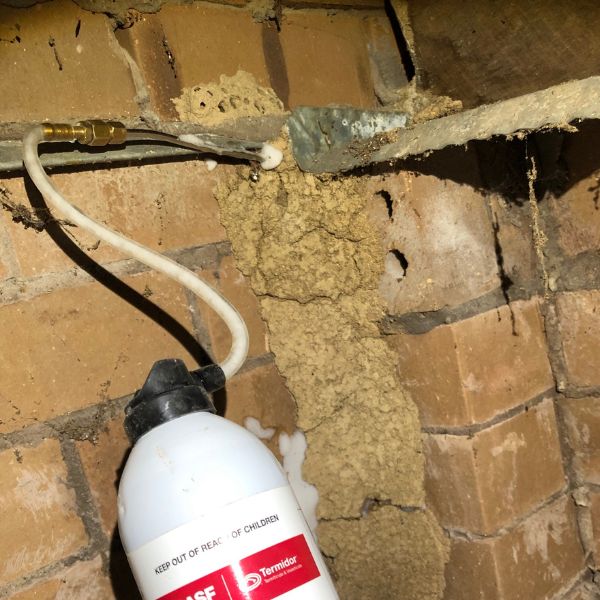
Live termites in the subfloor
When confronted with such an obvious and heavily populated termite lead, immediate targeted action is critical. To treat an entry point of this scale, the most effective method is inserting an injection needle to deliver Termidor Foam directly inside the mud tube.
We take care to leave the external workings intact during application. Preserving the lead allows termites to continue moving freely through the tunnel, ensuring maximum transfer and exposure to the active controlling agent, Fipronil.
Live termites in the floorboards
For this specific area, our technicians chose to apply a dusting control agent to eradicate the active termites.
We opted for dust over liquid or foam treatments primarily because we needed to keep the environment completely dry in a high-traffic area of the home. Additionally, the affected sections were localised and superficial, making dusting the most efficient and precise option.
Watch the quick clip below to see our technician apply the dusting treatment in action.
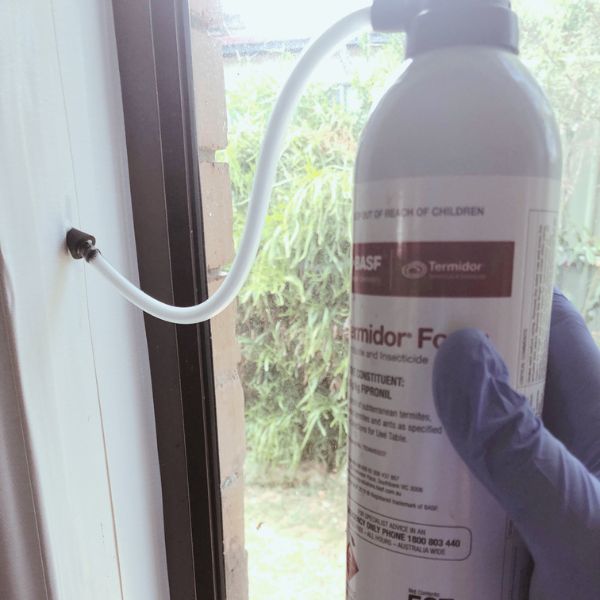
Live termites in the kitchen window frame
We also targeted active termites inside the window frame using Termidor Foam.
Because this area was easily accessible and located in a main living space, we used cloth tape over the entry points to cleanly seal the foam inside the timber, keeping the application contained exactly where it was needed.
What the homeowner said
Actual Google Review from this Burbank homeowner:
The team came to site quickly and carried out an extensive search for termites and provided a detailed report with a treatment plan. A+++++
Nick, Burbank, 2026
Why Burbank acreage properties can be at higher risk of termites
Burbank’s semi-rural environment creates naturally favourable conditions for subterranean termites. Bordered by the extensive Brisbane Koala Bushlands and natural drainage corridors along Stockyard Creek and Tingalpa Creek, many homes sit directly adjacent to dense eucalyptus forest and consistently moist soils.
Many Burbank homes are located on larger acreage blocks surrounded by mature trees, bushland, garden beds, retaining walls, and fallen or decaying timber. These areas provide termites with abundant food sources and ideal nesting conditions right near residential structures. Shaded ground, heavy vegetation, mulch, and damp soil help termite colonies thrive and travel easily through the landscape.
On acreage properties, termite nests are often located well away from the house in surrounding bushland, with underground foraging galleries extending considerable distances beneath the soil to reach structural timber. Regular professional inspections and proactive chemical barriers are particularly important for homes surrounded by these natural Brisbane South bushland corridors.
This doesn’t mean every Burbank property will experience termites, but it does make regular professional inspections particularly important where homes are surrounded by vegetation, mature trees and large areas of natural ground.
What to do if you find termites in your home:
Our Recommended Three-Step Process
- Full and thorough termite inspection
- Initial treatment of the live termites
- Termidor HE Chemical Termite Management System (Barrier)