
Overview: The Love-Hate Relationship with Asian Geckos
Asian Geckos (Hemidactylus frenatus)—also known as Common House Geckos—are a staple of South East Queensland life. While active at night hunting prey across walls and ceilings, they divide public opinion. Some homeowners appreciate them as free pest control because they eat moths, spiders, and cockroaches. Others find them highly irritating due to their loud “chuk-chuk-chuk” territorial noises, their droppings, their tendency to short out air conditioning units, and the simple discomfort of having lizards hanging directly overhead.
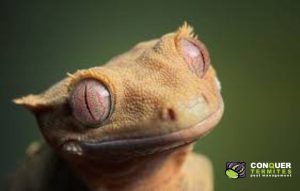
The reality of Gecko control
For professional pest controllers in Australia, options are limited because there is no registered poison designed specifically for geckos. While countless homemade cocktails and urban myths claim to eradicate them, direct chemical elimination is not an effective long-term strategy.
Homeowners must realise that complete eradication is impossible. Geckos are highly mobile and will inevitably re-colonise your property from surrounding areas over time. Control is an ongoing management battle rather than a one-time fix.
Three-Step control strategy
Step 1: Starve them out & Block entry
The most effective way to reduce the gecko population is to remove their food source and shelter:
- Seal Cracks and Crevices: Geckos hunt near structural gaps they can quickly retreat into when threatened. Sealing these entry points makes them feel too vulnerable to stay.
-
Install Insect Screens: Ensure all open windows have tight insect screens to stop moths – the gecko’s favourite meal—from entering.
-
Manage Lighting: Turn off outdoor lights and pull curtains at night. Lowering the light output prevents flying insects from gathering, removing the geckos’ primary hunting grounds.
Step 2: Physical Traps (Not for the fainthearted)
If populations remain high, physical trapping methods can be used, though they do not offer a quick or humane release:
-
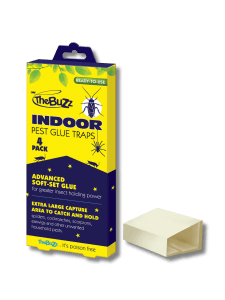
Standard Glue Boards: Available at hardware stores or supermarkets, these sticky cards can be placed near windows, lights, and surfaces where geckos congregate.
-
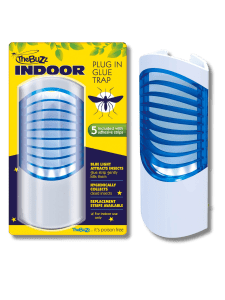
UV Light Glue Boards: Commercial units use UV light to attract moths to a sticky board. The trapped insects then lure the geckos onto the glue. It is best to place these devices a short distance away from your home so you aren’t actively drawing pests closer to your living spaces.
Step 3: Annual Pest Control: Schedule a professional general pest treatment at least every 12 months.
Simple equation: Fewer bugs = Fewer geckos
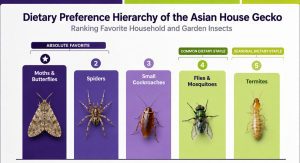
Favorite Foods
- Moths & Butterflies: A highly prized flying snack.
- Spiders: A common household favourite.
- Flies & Mosquitoes: Easily caught around the home.
- Termites: Often eaten in large numbers when swarming.
- Small Cockroaches: Provide a highly nutritious meal.
Fast facts about Asian Geckos
-
Diet: They are nocturnal, opportunistic hunters that pounce on slow-moving insects rather than chasing them down.
-
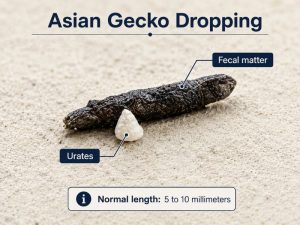
Identifying Droppings: Geckos do not urinate separately; they excrete waste through a single opening called a cloaca. You can spot gecko droppings by the distinct white tip on the end, which is crystallised uric acid.
-
No Eyelids: Geckos lack eyelids and must continuously lick their eyes with their tongues to keep them clean and moist.
-
Tail Detachment: When grabbed by a predator, a gecko will drop its tail to escape. While the tail grows back, it will never match the original color or skin patterns.
-
Noisy Nature: Unlike quiet native Australian geckos, Asian geckos are notoriously loud, issuing a sharp “chuk-chuk-chuk” sound to defend their territory.