
Can I Treat My House for Termites Myself? (DIY Termite Treatment in Brisbane)
Many Brisbane homeowners eventually ask the question: “Can I treat my house for termites myself?”
Technically, in Australia, a homeowner can buy and apply certain termite treatment chemicals to their own property. It’s your home – your castle – and protecting it from termites is important.
However, applying an effective termite treatment around a home is far more complex than most people realise. Before attempting a DIY termite treatment, there are several important factors Brisbane homeowners should understand.
Should You Do Your Own Termite Treatment?
If you searched online for “DIY termite treatment” or “how to treat termites myself”, you’re clearly looking for solutions.
We won’t simply say “don’t do it.”
But we will explain the realities of termite treatments so you can make an informed decision about whether DIY treatment is the right approach for protecting your Brisbane home.
Can You Buy the Right Termite Treatment Chemical?
One of the first challenges with DIY termite treatment is access to professional-grade chemicals.
The termite chemicals available from places like Bunnings or rural produce stores are usually generic formulations and are not the same as the professional products used by licensed termite specialists.
For example:
-
Termidor is widely regarded as one of the most effective termite treatment products available.
-
However, the manufacturer BASF does not allow Termidor to be sold to the general public.
If you see Termidor for sale online, it is likely:
-
Imported illegally
-
Old or expired stock
-
Not compliant with Australian regulations
Using these products can be ineffective and potentially unsafe.
Do You Know Where and How to Apply Termite Treatment?
A professional termite treatment around an average Brisbane home often requires hundreds of litres of termiticide to be applied correctly.
This involves:
-
Mixing large quantities of chemicals with water
-
Applying the treatment continuously around the entire building
-
Ensuring no gaps exist in the termite barrier
Even a small untreated section can allow termites to enter your home undetected.
Soil preparation is also critical
For a proper termite barrier:
-
Trenches must reach down to the building’s footings
-
Trenches must be at least 150mm wide
-
Tree roots and debris must be removed
-
The chemical must bond correctly with the soil
If the soil preparation is incorrect, the treatment may fail.
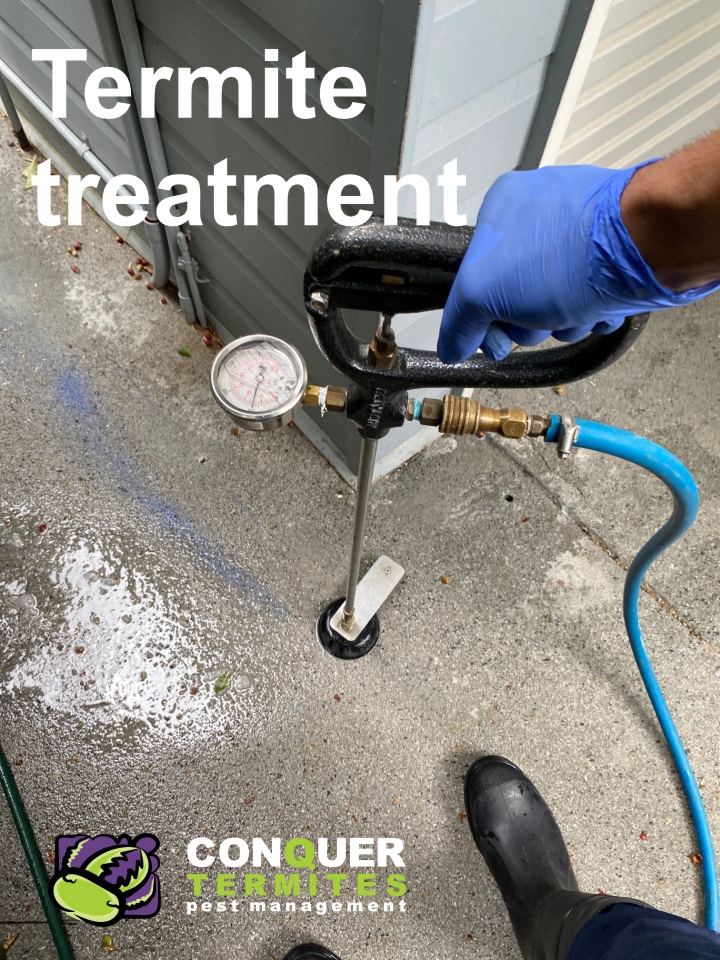
Treating Under Concrete Is Even More Difficult
Many Brisbane homes have:
-
Concrete paths
-
Driveways
-
Patios
-
Garage slabs
To treat these areas properly, technicians must:
-
Drill 12mm holes every 300–400mm
-
Inject the chemical beneath the slab
-
Apply the treatment under pressure (about 35 psi)
-
Ensure the chemical disperses evenly in a 360-degree pattern
This requires specialised injection equipment that most homeowners simply don’t have.
Using More Chemical Does Not Work Better
A common mistake in DIY termite treatments is thinking that using stronger chemical mixtures will improve the results.
This is incorrect.
Termiticides are designed to:
-
Bond with soil particles
-
Disperse evenly in the soil
-
Create a continuous treated zone
Mixing stronger than the manufacturer’s instructions can reduce effectiveness and increase safety risks.
Remember: More chemical is not better — correct application is what matters.
Safety Considerations When Applying Termite Chemicals
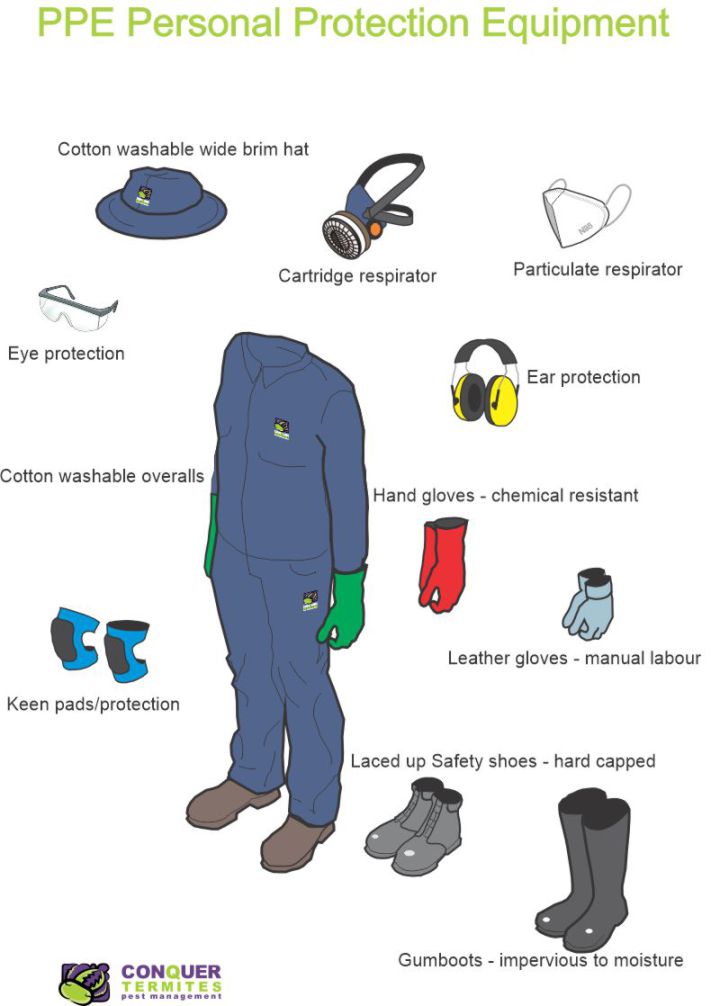
Handling termite chemicals requires proper personal protective equipment (PPE).
This includes:
-
Chemical-resistant gloves
-
Full-length cotton overalls
-
Eye protection
-
Respirator during mixing and application
You are also personally responsible if chemical runoff:
-
Contaminates stormwater
-
Harms neighbouring pets
-
Causes environmental damage
Licensed pest control technicians are trained to manage these risks safely.
No Warranty, Documentation or Protection
Another major disadvantage of DIY termite treatment is the lack of documentation and warranty.
If a licensed termite professional treats your home, you receive:
-
Treatment documentation
-
Warranty protection
-
Compliance with Australian Standards
If you plan to sell your home, buyers and building inspectors will often ask for evidence of termite protection.
A DIY treatment usually cannot be verified, which can reduce buyer confidence.
Peace of Mind Matters
Even if you successfully apply a DIY termite treatment, many homeowners find themselves wondering:
-
Did I apply it correctly?
-
Did I miss a section of the house?
-
Are termites still getting in somewhere?
Without professional verification, you may find yourself constantly checking for termite activity.
How a termite treatment should be done
A Real Case Study from Brisbane
We were recently called to a home in Capalaba where the owners discovered live termites in their bathroom.
Months earlier, the homeowner and his father-in-law had attempted a DIY termite treatment around the house.
They purchased a termite chemical from Bunnings and applied it around the property using a homemade delivery method through a tube.
While the effort was admirable, there were two major problems:
-
The chemical they purchased was a repellent formulation, which most professional termite companies no longer use.
-
The application method did not deliver the treatment properly into the soil.
As a result, termites were able to continue entering the home unnoticed.
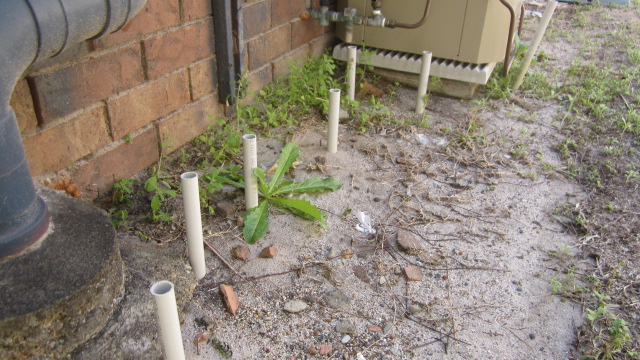
Professional Termite Treatment for Brisbane Homes
A properly installed termite treatment should:
-
Create a continuous chemical barrier around the building
-
Protect concealed entry points under slabs and footings
-
Use professional-grade termiticides
-
Be installed by licensed technicians following Australian Standards
Need Advice About Treating Your Home for Termites?
If you are dealing with termites or considering treatment for your Brisbane home, professional advice can save significant time, cost and risk.