
How do you know if you have termites in your wall?
The most common signs of termites in walls are termite mudding, bubbling or flaking paint, soft or hollow timber trims, faint clicking noises and unexplained damage around skirting boards, windows or door frames. Because Gyprock conceals the timber frame, termite activity may already be established before anything becomes visible.
Do not spray, break open or cut into a suspicious area. Photograph what you have found and arrange a professional termite inspection.
Signs of termites in your wall
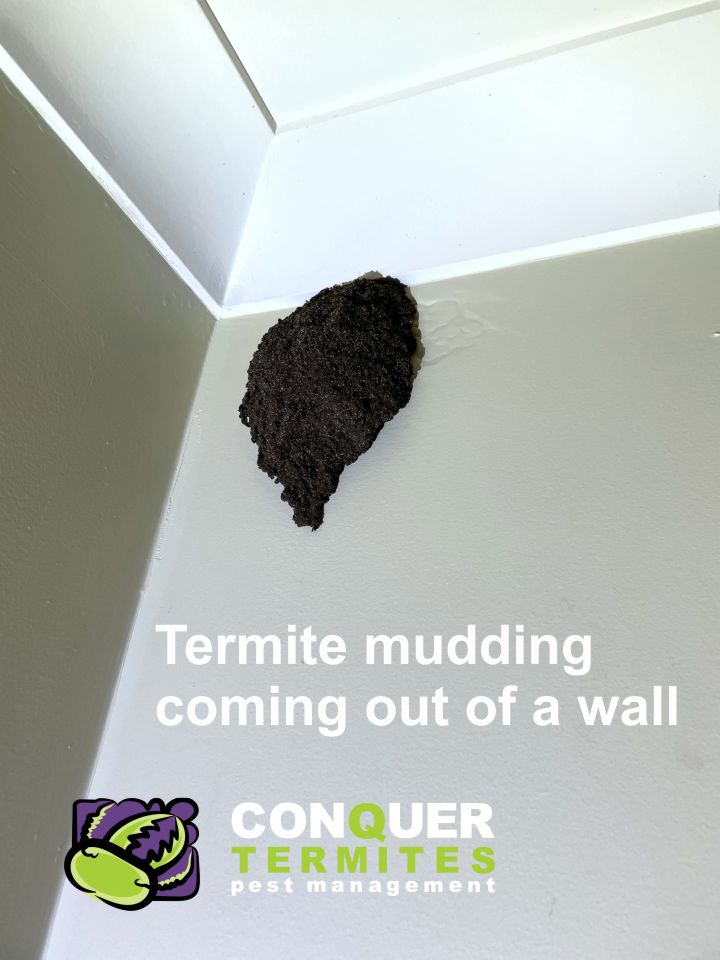
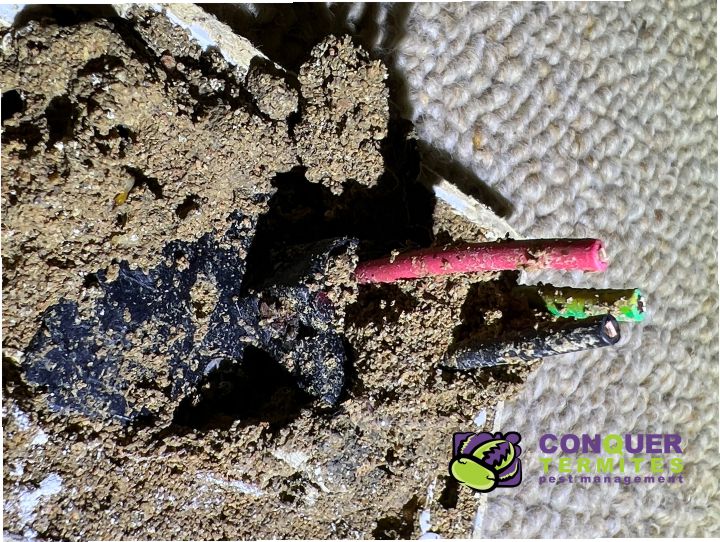
- Termite mudding protruding from the wall
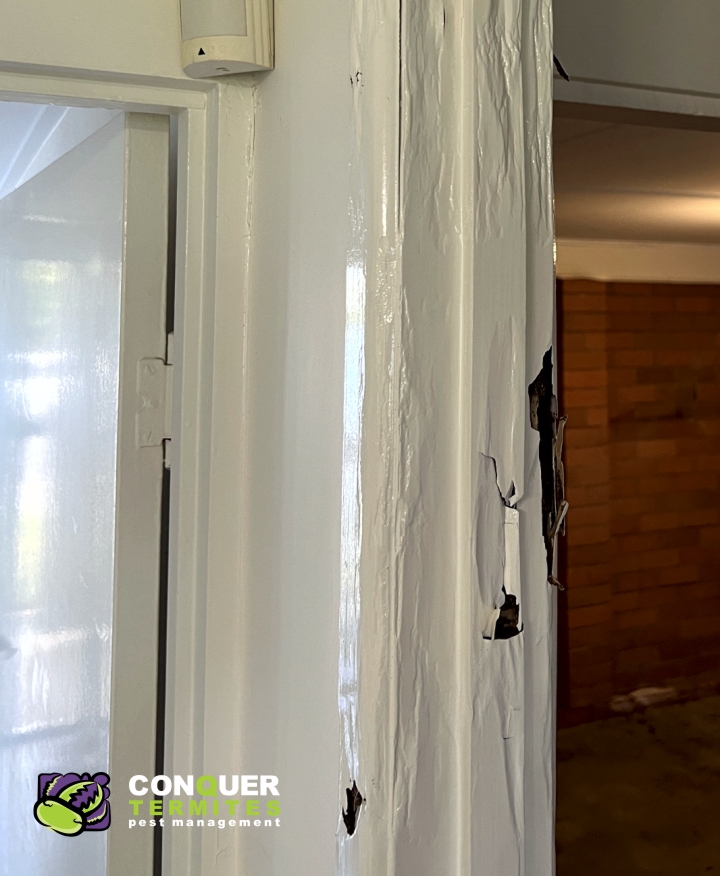
- Bubbling, blistering or flaking paint
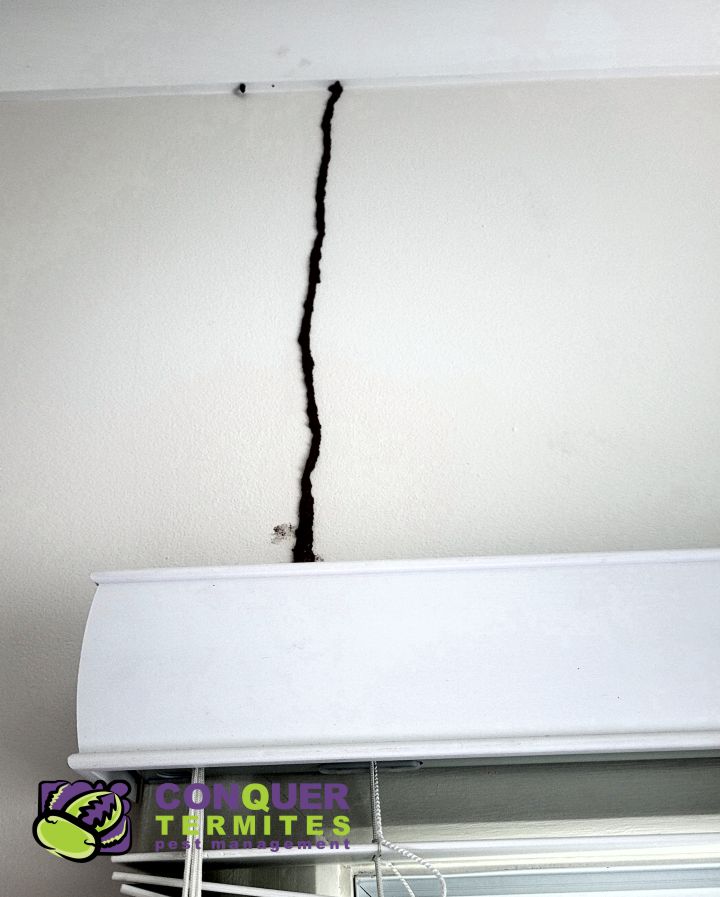
- Mud leads travelling along the wall
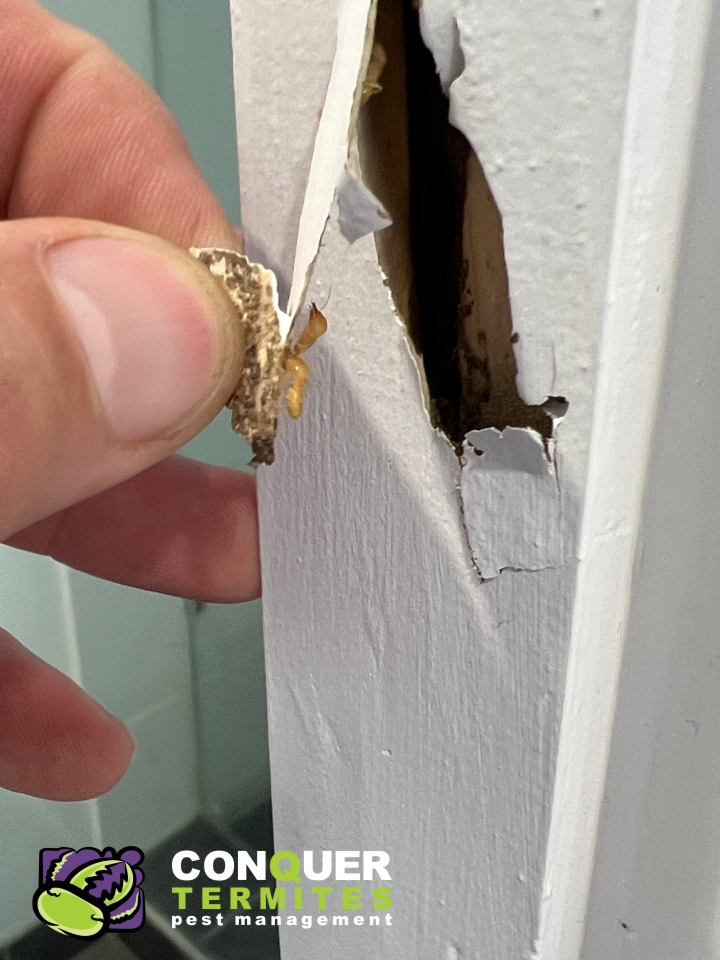
- Soft, hollow or crumbling skirting and architraves
- Unexplained damage around power points, door frames or windows
- Faint clicking, tapping or gnawing sounds
1. Termite mudding coming from the wall
This is usually when the alarm bells should start to ring. This mudding could appear overnight, indicating significant termite activity behind the wall lining. Termite ‘mudding’ is typically dark brown and crumbly to the touch.
2. Bubbling or flaking paint
Paint can start peeling, bubbling or flaking when termite activity is concealed behind the wall. This can be caused by elevated moisture associated with a large concentration of termites, including activity around a bivouac or concealed nesting area.
3. Termite mud leads
Termite mud leads on the outside are another telltale sign you have a termite issue in the wall. Termites never want to be out in the open as they always operate in an enclosed environment where they stay moist and secure. They tend to build these leads when they want to bridge over a section to travel more rapidly.
4. Soft or hollow timber trims
If you have termite activity in your walls, there is a good chance they will start eating the surrounding timber skirting boards, window or door frames. Most trim timbers are made from soft pine, a highly desirable food for termites.
It’s not a good thing that the termites are eating these timbers, but it is a good thing that they have made themselves evident before severe damage occurs in the walls.
5. Damage around electrical fittings or frames
If all of a sudden the power flips off or the light switch doesn’t work, this could be a sign you have termites. Inside the wall, termites can build up a lot of mudding that can encase electrical wiring, causing the shorting.
Remember, your first contact for advice is a qualified Electrician.
6. Clicking or tapping noises
Clicking noise emitting from the wall – is it termites?
Termites can make two types of noise that humans can hear. A clicking sound or a soft gnawing noise.
We mostly hear the ‘clicking’ noise when the soldier termites bang their heads on the timber to signal an evacuation alarm. They usually only make this noise if they have been disturbed.
The soft gnawing sound comes from the worker termites as they scrape the wood into their mouths with their mandibles (jaws). You really need a quiet environment and a very good ear to hear this sound.
Many homeowners mistake the scuttling noise of cockroaches or rodents in the wall cavity for termites.
What do termites sound like …. Learn more

How can you check for termites without disturbing them?
Apart from visible evidence such as mudding, damaged timber and termite leads, homeowners have limited options for checking inside a wall without disturbing the activity. Look and listen for the warning signs described above, photograph anything suspicious and arrange a professional termite inspection.
Do not cut into the wall, break open termite mudding or spray the area. Disturbing termites may cause them to retreat into concealed sections of the building, making their location and extent more difficult to assess.
If you are invasive, you risk disturbing the termites, causing them to flee the structure temporarily. You might think this is a good thing! But then you limit your ability to detect them in other areas. Also, when you call in the professional pest controller, and you should, they’ll have zero chance to treat and detect the termites.
How professionals detect termites behind walls
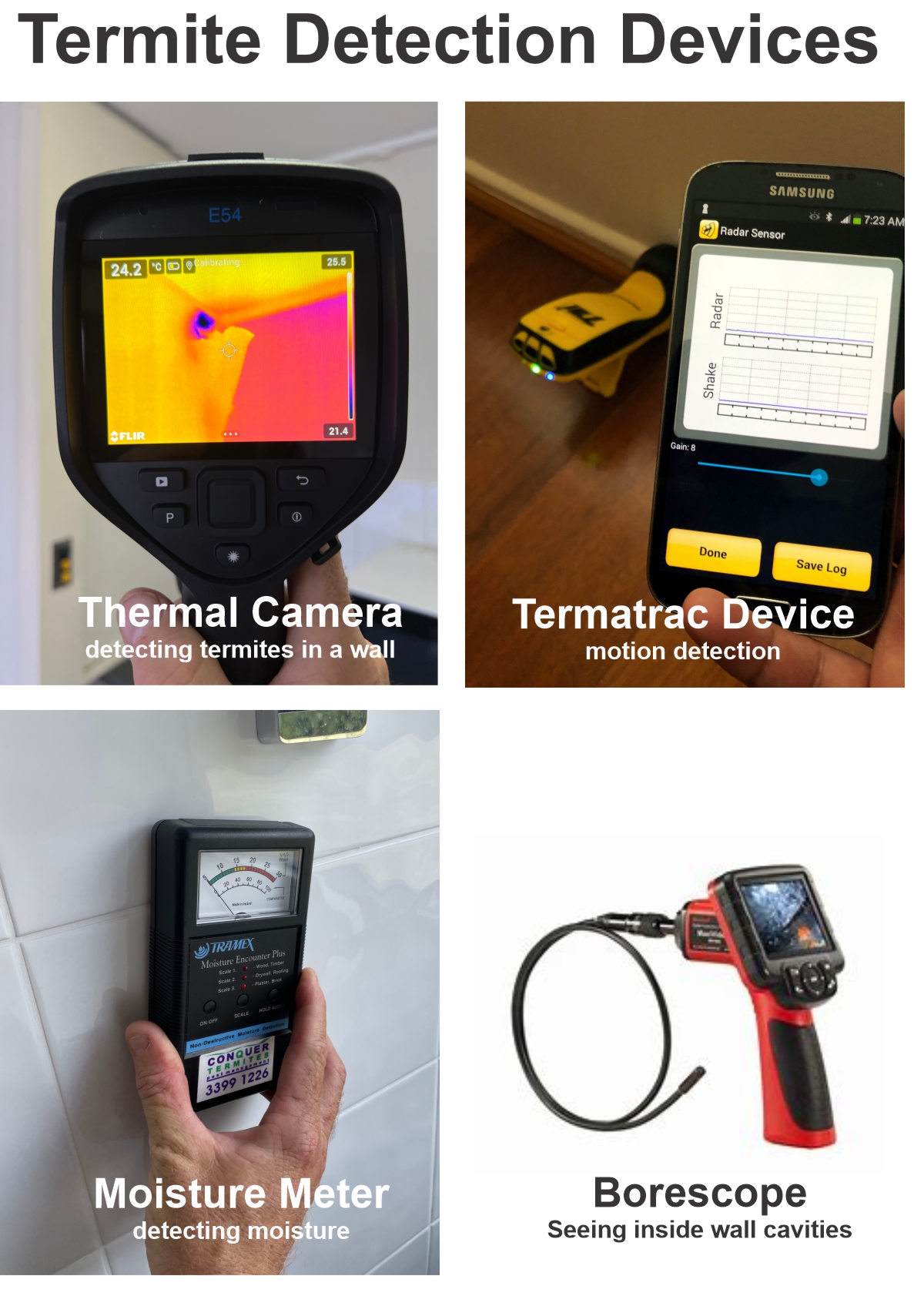
A termite inspection in Australia requires an inspector to follow the guidelines outlined in the Australian Standards 3660.2 & 4349.3. It is referred to as a Visual Termite Inspection, meaning it is non-invasive (can’t make holes in the walls). But Conquer Termites inspectors are always fully equipped with four detection devices to give you that extra information.
- Thermal camera – picks up surface temperature anomalies (doesn’t see through walls).
- Moisture meter – detects areas on the wall that have high moisture readings.
- Termatrac Motion Detection device – sends microwave signals into the wall to detect movement.
- Borescope – allows inspecting inside the wall cavity by making a small hole.
See how we conduct a professional termite inspection in Brisbane. Please click here
Brisbane case study: Live termites found inside a Carindale wall
This was a recent situation where the homeowner didn’t know they had termites, but it quickly became evident when we used our devices.
Can termite detection tools see through walls?
No. Thermal cameras do not see through walls. They identify surface temperature differences that may indicate moisture or concentrated termite activity. Moisture meters and motion detectors provide additional evidence, but an invasive inspection may still be needed for confirmation.
Why might an invasive termite inspection be recommended?
Even with all our fancy detection devices, we might recommend an invasive inspection and removing some wall lining to get visual confirmation of termites. Usually, we can narrow down the areas we want to check with the above devices.
There is a genuine cost-versus-benefit consideration when opening a wall. Removing the wall lining might only reveal minor termite damage or activity that will cost less than repairing the wall.
But the only definitive way to assess the true extent of termite damage in your walls is to remove all the gyprock sheeting until there is no evidence of termite activity.
Why do we need to advise to be invasive after a termite inspection
We might complete a termite inspection, and there is no visual evidence of termites – no soft timber, no high moisture readings and no thermal anomalies. There might have been past termite activity that has been inactive for an extended period but has caused extensive damage in the walls. The only way to know is to reveal it.
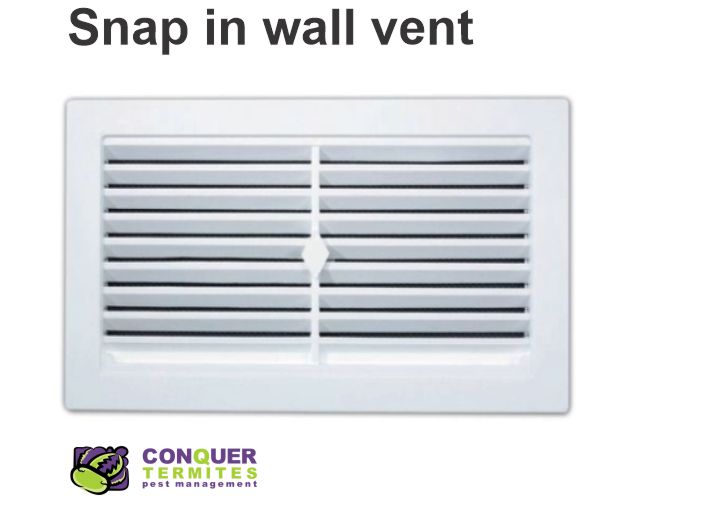
Snap-in wall vent to check for termites in your wall
A good approach is to cut a 245 x 145 mm hole in the wall and place a snap-in wall vent. This way it is super tidy and allows ongoing inspection.
What to do if you suspect termites in a wall
Think you have found termites in a wall?
- Do not spray them.
- Do not break open the mudding.
- Do not remove wall linings.
- Photograph the evidence.
- If the area has already been opened, cover it gently with tape.
- Call a licensed termite specialist.
Call your local Brisbane Termite Specialist
Same-day response – available Monday to Friday
We cover all homes on the Northside, Southside, and Bayside Brisbane
Found an insect and need to know if it’s a termite?
Not sure if it’s termites or ants? Our team can help identify what you’re seeing before it becomes a bigger problem.
More useful information you might want to know when you have found termites in your home



Written by: Conquer Termites
Technically reviewed by: Rowan Bate, Founder and Licensed Termite Inspector
Last updated: July 2026