How termites enter concrete slab homes in Brisbane
Concrete slabs aren’t termite-proof. Discover the hidden entry points around your home – and why most termite attacks happen right at the slab edge.

Concrete slabs aren’t termite-proof. Discover the hidden entry points around your home – and why most termite attacks happen right at the slab edge.
In Brisbane, it’s not a question of if termites will attempt to enter your home – it’s when. Our climate, combined with a wide mix of building styles – from traditional Queenslanders to modern slab-on-ground homes – creates plenty of opportunities for termites to gain access without being noticed.
Brisbane’s warm, humid, subtropical conditions provide the ideal environment for subterranean termites to thrive. Unlike cooler regions, termite activity here continues year-round. Our soil conditions and dense suburban housing also mean that multiple active colonies can exist within a single block.
And when you factor in slab-on-ground construction, the risk of concealed entry only increases.
In Brisbane, it is estimated that approximately 80% to 85% of modern dwellings (built in the last 40 years) use slab-on-ground foundations. In new estates (e.g., North Lakes, Ripley), the percentage of slab-on-ground is nearly 100%, with the “Waffle Pod” being the most common specific type due to its efficiency on the reactive clays common in the region.
Many Brisbane homeowners assume that a house built on a concrete slab is automatically “termite proof.” Unfortunately, this is one of the most dangerous misconceptions we see.
Termites don’t eat through concrete – but they don’t need to. They are experts at exploiting tiny gaps, cracks, and concealed entry points within and around the slab.
Modern slab-on-ground homes are often assumed to be “protected” – but in reality, they can be highly vulnerable to concealed termite entry.
This makes detection far more difficult – and damage more advanced by the time it’s discovered.
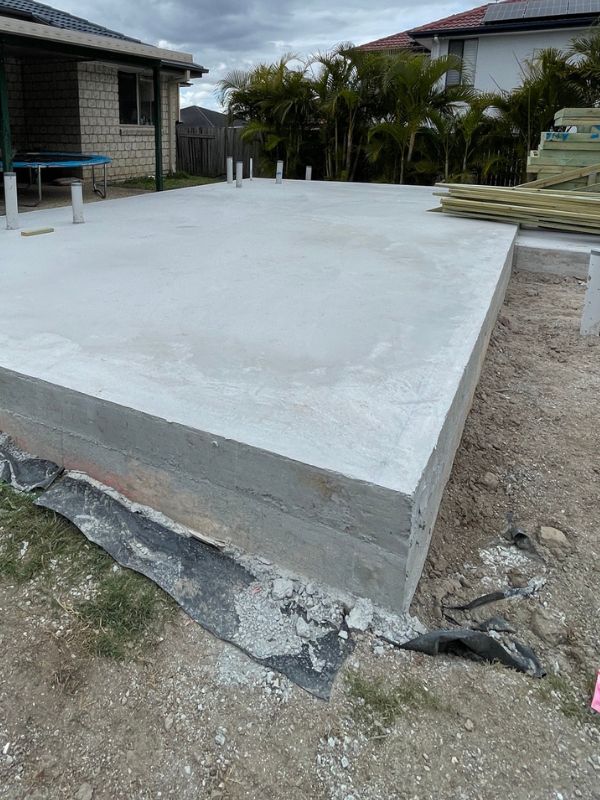
In 2011, the National Construction Code referenced updates to AS 2870 (Residential slabs and footings).
Under these guidelines, a slab can be considered a physical termite barrier – but only if:
When these conditions are met, the slab may be certified as compliant for termite protection.
There’s a second, equally important requirement that often gets overlooked.
To achieve proper termite protection compliance, builders must also provide:
This inspection zone allows termite entry to be seen early, before significant damage occurs.
In practice, we see two major issues:
On top of this, many construction methods don’t allow slab edges to remain exposed, particularly where external brick walls sit on their own strip footings.
Based on our experience across Brisbane:
Through gaps in the brick mortar where the brickwork is in contact with soil. This creates a hidden pathway straight into the structure – completely bypassing what homeowners believe is a “solid” barrier.
A concrete slab is not termite protection on its own.
Without:
……your home remains vulnerable to concealed termite entry
These are real Brisbane homeowners – not from AI bots, or CRM harvested