Termite treatment options in Brisbane: Chemical Barriers vs Baiting Systems

If you’ve been told you need termite treatment, the next question is almost always: “Should we choose a chemical barrier or a baiting system?”

Both methods work. But they work in different ways – and they suit different homes.

At Conquer Termites, we don’t recommend a system based on price or popularity. We assess your home’s construction, soil type, termite pressure and long-term protection goals before recommending the right approach.

This guide clearly explains the difference, so you can make an informed decision.
Understanding your termite treatment options

Termite management in Brisbane isn’t one-size-fits-all. The way termites behave, how homes are built, and how soil reacts all influence which method will perform best.

Why Brisbane homes require a tailored approach

Brisbane’s sub-tropical climate creates ideal conditions for subterranean termites year-round. Warm temperatures, reactive clay soils, and slab-on-ground construction mean termites can remain active year-round.

Many homes also have:

  • Concrete paths hard against external walls
  • Decks and retaining walls attached to structures
  • Poor drainage or high moisture zones
  • Deep footings or sloping ground

Subterranean termites in South East Queensland

The primary destructive species in Brisbane live underground. They travel through soil, build mud leads and enter homes through:

  • Slab penetrations
  • Construction joints
  • Weep holes
  • Landscaping that bridges the slab edge
  • Embedded external brick walls

Because they approach from below ground, any effective solution must address soil access or colony behaviour.

Chemical treatment – Barrier

Chemical termite barriers (Non-repellent soil treatments)

A chemical barrier involves applying a professional-grade, non-repellent termiticide into the soil around and beneath your home.

Unlike older-style treatments that repelled termites, modern products are undetectable to them. Termites pass through the treated zone and transfer the active ingredient between each other, leading to colony collapse.

How a chemical barrier works

The treatment is applied by:

  • Trenching the soil around the perimeter

  • Drill and inject through concrete where required

  • Treating key structural penetration points

Once installed, the soil surrounding the structure becomes a treated zone. Any termite attempting to enter the home must pass through it. This provides immediate structural defence.

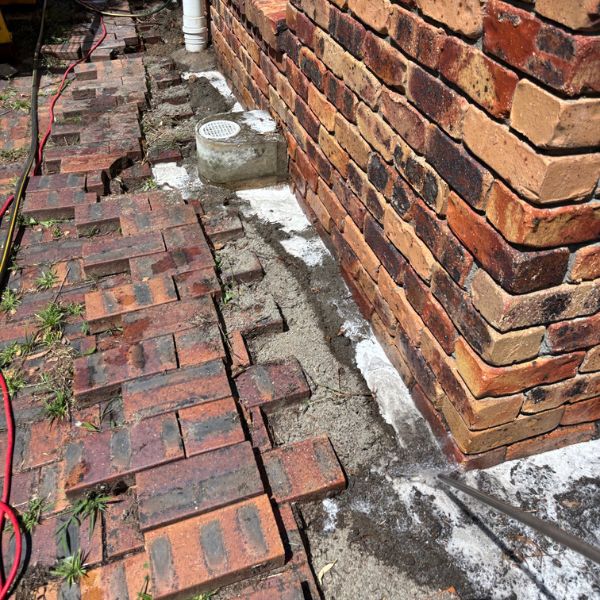
Applying Termidor under pavers

When a chemical barrier is recommended

Chemical barriers are often ideal when:

  • The home is built on a slab

  • There is reasonable soil access

  • Long-term structural protection is required

  • Active termites are entering from below ground

  • The homeowner wants extended protection (often up to 8 years depending on product)

In many Brisbane homes, this method provides the most comprehensive protection.

How Conquer does a chemical treatment

Advantages of chemical termite treatments

  • Immediate structural defence

  • Long residual life

  • Works even if the colony location is unknown

  • Low disruption once completed

  • A treatment warranty can apply

Limitations to consider

  • Requires application to the soil continuously around the structure

  • May involve drilling through paths or slabs

  • Not suitable where heavy rock fill prevents proper soil saturation

  • Does not eliminate every colony in the area – it protects the structure

More important information about chemical treatments

Termite Baiting System

Termite baiting systems for Brisbane homes

Baiting systems use in-ground stations installed around the perimeter of your property.

These stations contain monitoring material that termites naturally feed on. When activity is detected, a growth regulator bait is introduced.

The termites carry the bait back to the colony, gradually eliminating it.

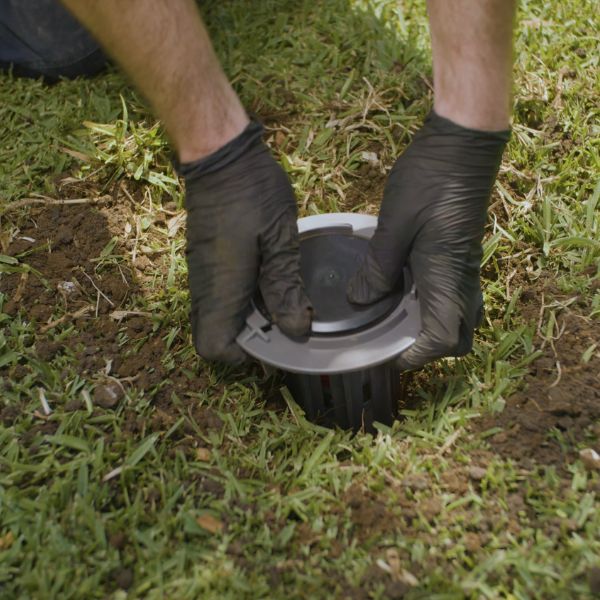
A Conquer Termite technician installing a Trelona inground bait station in Brisbane

How termite baiting systems work

The process involves:

  • Monitoring stations are installed in the soil around the home
  • Termites discover and feed on the timber interceptors
  • Once activity is confirmed, bait is added
  • Termites share the bait throughout the colony
  • The colony declines gradually

When baiting is the right choice

Baiting systems may be appropriate when:

  • Soil access is limited

  • Concrete fully surrounds the home

  • The site layout makes trenching impractical

  • A non-invasive approach is preferred

  • Monitoring for early detection is desired

Recommended baiting system

The BASF Trelona baiting system is a modern, non-invasive approach to termite colony elimination, widely used in Australia. It uses active bait capsules installed directly into robust in-ground stations, allowing termites to feed immediately and transfer the bait back to the colony – without trenching or liquid soil treatments.

Trelona stations are easy to monitor and maintain, providing a reliable, flexible long-term termite management solution.

BASF Treloan logo

Advantages of termite baiting

  • Minimal drilling or disturbance

  • Flexible installation in complex sites

  • Can eliminate specific active colonies

  • Provides ongoing monitoring

Limitations of baiting alone

  • Slower time to impact (weeks to months)

  • Termites must find the stations

  • Requires ongoing professional servicing

  • Does not form a continuous structural barrier

For some homes, baiting alone may not provide the level of long-term structural defence desired.

Chemical vs Baiting – Which is better?

There is no universal “best” option. The better question is: Which system suits your home and risk profile?

Choose a chemical barrier if:

  • You want strong immediate protection

  • Termites are active inside the structure

  • Good access allows proper installation

  • You want a treated soil zone around the home

Choose a baiting system if: 

  • Access prevents proper trenching

  • You want minimal disturbance

  • You prefer a managed monitoring program

  • The construction type makes barriers difficult

In some cases, both may be recommended

In higher-risk homes, a combined approach can be appropriate:

  • Chemical barrier for structural protection

  • Baiting for ongoing monitoring

This layered strategy can increase confidence in long-term termite management.

First step – get a thorough termite inspection done to work out what is the best approach

Why Proper Inspection Comes First

Choosing between chemical treatment and baiting without a professional inspection is risky.

A thorough termite inspection allows us to assess:

  • Evidence of active termites

  • Construction type

  • Soil conditions

  • Access limitations

  • Moisture issues

  • Previous treatments

  • Risk factors around the property

Only after assessing these factors can a tailored recommendation be made.

Watch how a proper termite inspection should be done

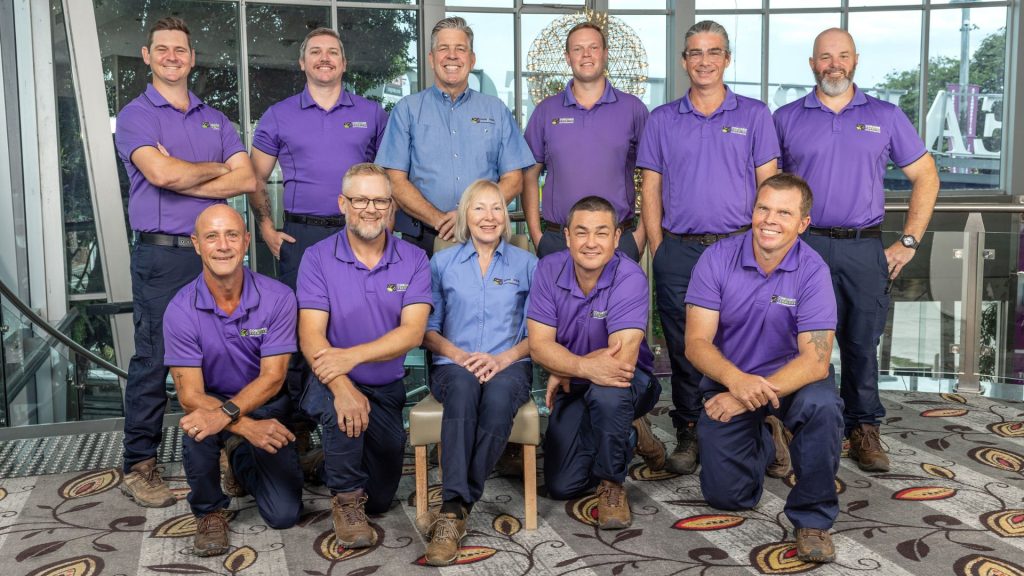
Conquer Termites full team photo 2025

Our approach – done properly

At Conquer Termites, our process is simple and thorough:

  1. Conduct a comprehensive termite inspection

  2. Identify current activity and risk factors

  3. Explain treatment options clearly

  4. Recommend the most suitable system

  5. Install according to the product label and standards

  6. Provide documentation and guidance on ongoing inspections

Termite protection isn’t about choosing the cheapest option. It’s about choosing the right solution for your home.

  • Call us NOW

Same day response – Monday to Friday

We’ll get out to you today

  • Send us a photo to identify 

We’ll help identify what you’re seeing

Not sure if it’s termites or ants? Our team can help identify what you’re seeing before it becomes a bigger problem.

Frequently Asked Questions

What is the fastest termite treatment?

A properly installed chemical barrier generally provides the most immediate structural protection, depending on access and site conditions.


Is baiting cheaper than chemical treatment?

Baiting may appear lower cost upfront, but it is an ongoing managed system with servicing requirements. Chemical barriers typically involve higher upfront investment with long-lasting protection when installed correctly.


Do I still need annual termite inspections?

Yes. Regardless of treatment type, regular termite inspections are recommended to detect new activity and maintain protection strategies.